
Top 10 CEOs with an MBA Degree
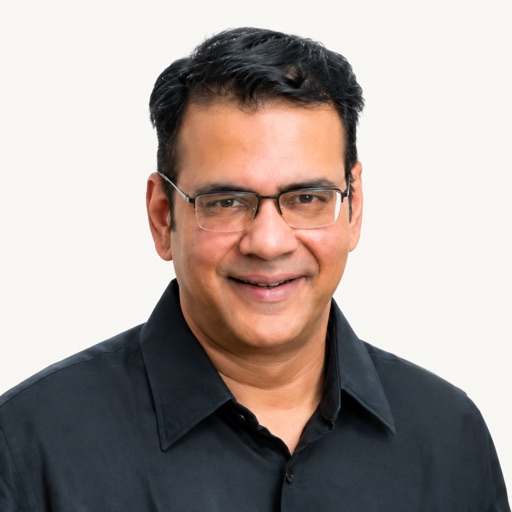
Plenty of people pursue an MBA hoping it will change their trajectory. Some of the most well-known CEOs in the world went to business school with that same hope.
But if you look closely at what actually happened, something more specific emerges.
The MBA was rarely the turning point. It was the accelerant. These leaders were already driven, already capable, already asking bigger questions than their roles allowed. Business school gave those qualities a structure. And a network.
This post profiles 10 well-known CEOs with an MBA degree and what business school actually contributed to their careers. Understanding that distinction matters a lot when you are evaluating whether an MBA is the right move for you.
If you are planning to apply to the schools these leaders attended, start by understanding what gmat scores for top business schools look like. That gives you a realistic preparation baseline before anything else.
Not sure which MBA program actually fits your profile?
Your background, target role, and career goals should drive the school decision — not rankings alone. This tool helps you find programs that match where you genuinely are.
Find Your MBA Program FitWhat the Research Says About MBAs and CEOs
The individual stories are easy to find. The data is worth knowing too.
What this means practically: the MBA is not a requirement for the top. But it is consistently overrepresented among the people who get there. That pattern is worth examining, not just celebrating.
Top 10 CEOs with an MBA Degree
Here is a quick-reference summary. Click any row to jump to the full profile.
| # | CEO | Company / Role | B-School | MBA Year |
|---|---|---|---|---|
| 1 | Satya Nadella | CEO, Microsoft | Chicago Booth | 1997 |
| 2 | Tim Cook | CEO, Apple | Duke Fuqua | 1988 |
| 3 | Jamie Dimon | CEO, JPMorgan Chase | Harvard Business School | 1982 |
| 4 | Sundar Pichai | CEO, Google and Alphabet | Wharton, UPenn | — |
| 5 | Indra Nooyi | Former CEO, PepsiCo; Board Director, Amazon | IIM Calcutta + Yale SOM | 1980 |
| 6 | Ajay Banga | President, World Bank; Former CEO, Mastercard | IIM Ahmedabad | — |
| 7 | Mary Barra | CEO, General Motors | Stanford GSB | 1990 |
| 8 | Anand Mahindra | Chairman, Mahindra Group | Harvard Business School | 1981 |
| 9 | Alex Gorsky | Former CEO, Johnson and Johnson | Wharton, UPenn | 1996 |
| 10 | Shantanu Narayen | CEO, Adobe | Berkeley Haas | 1993 |
Click any card below to read the full profile.
Satya Nadella
CEO, Microsoft
He graduated with an MBA in Business Administration in 1997, specializing in entrepreneurial finance and leadership. By 2014, he was CEO of Microsoft, overseeing one of the most significant corporate reinventions of the past two decades, built on the cloud computing pivot that became Microsoft Azure.
Nadella has publicly credited Booth with developing his ability to see complex problems from multiple perspectives. That cross-functional thinking became the foundation of his entire leadership philosophy, which he articulates around empathy, clarity, and building capability in constrained environments.
Tim Cook
CEO, Apple
In 1998, he made a pivotal career move to Apple as Senior Vice President of Worldwide Operations. One of his first major decisions was to shut down Apple’s owned factories in favor of contract manufacturing. That restructured Apple’s inventory from months of supply to just days, freeing up enormous capital and generating significant profits before Apple became a hardware icon.
Cook was named CEO of Apple on August 24, 2011. Under his leadership, Apple became the world’s most valuable public company. His MBA gave him the financial and operational frameworks to build supply chains at a scale no one had attempted before in consumer electronics.
Jamie Dimon
CEO, JPMorgan Chase
His tenure at JPMorgan Chase has been defined by strategic discipline at moments of crisis. During the 2008 financial collapse, JPMorgan navigated better than almost any of its peers. Dimon attributes much of his risk management rigor to the frameworks he developed at HBS.
He remains one of the longest-serving major bank CEOs in history. His path from HBS to the top of American finance is one of the clearest examples of what business school credentialing and network can unlock at the very highest institutional levels.
Sundar Pichai
CEO, Google and Alphabet
He joined Google in 2004 and is credited with convincing Google’s founders to build Chrome when the idea was internally controversial. Chrome is now the world’s most used browser by a significant margin.
Pichai became CEO of Google in 2015 and CEO of Alphabet in 2019. His trajectory illustrates how engineering depth combined with business school strategy training creates a leader who can operate fluidly between technical teams and board-level decisions.
Indra Nooyi
Former CEO, PepsiCo | Board Director, Amazon
She joined PepsiCo in 1994 and was named CEO in 2006 — the fifth CEO in PepsiCo’s 44-year history at the time. Under her leadership, PepsiCo’s annual revenue nearly doubled. She introduced the “Performance with Purpose” initiative, steering the company toward financial growth and a more health-conscious product direction.
She was ranked among the world’s most powerful women in business throughout her tenure and received an Honorary Doctorate from Yale in 2019. She now serves on the Board of Directors at Amazon. Her trajectory is directly relevant for Indian applicants wondering whether IIM credentials translate internationally.
Ajay Banga
President, World Bank | Former CEO, Mastercard
As Mastercard CEO, he led the company’s digital transformation and financial inclusion agenda for over a decade. He received the Padma Shri in 2016. In June 2023, he was appointed President of the World Bank by US President Biden — the first Indian-American to hold the role.
His story is a reminder for Indian applicants: the question is not always “which US school should I attend?” Sometimes the better question is “what is the most credible program for the career I want to build?”
Targeting Harvard, Wharton, ISB, or IIM? Your application needs a strategic edge.
Getting into the programs these CEOs attended is not just about scores. It is about presenting your professional story with clarity and conviction. Our mba admissions consulting team has helped candidates get into exactly these programs.
Talk to an Admissions AdvisorMary Barra
CEO, General Motors
She became the first female CEO of a major global automaker when she took the top role at GM in 2014. Under her leadership, GM has committed to a zero-emissions future, built around a vision she has articulated clearly: zero crashes, zero emissions, zero congestion.
Her path is a useful frame for professionals who are already inside a company and wondering whether going back to school would help. In Barra’s case, the answer was yes — and the results were industry-defining.
Anand Mahindra
Chairman, Mahindra Group
He went on to transform Mahindra Group from a jeep manufacturer into a 21-billion-dollar conglomerate spanning automobiles, IT, real estate, and hospitality across 20 industries. He is listed in Fortune’s “World’s 50 Greatest Leaders” and received the Padma Bhushan in 2020.
For Indian applicants, his story is a reminder that HBS is not just a finance and consulting school. It builds general management leaders capable of navigating highly diverse business portfolios across markets and industries.
Alex Gorsky
Former CEO, Johnson and Johnson (2012–2022)
He became CEO of Johnson and Johnson in April 2012. During his tenure, J&J’s market capitalization grew from roughly 180 billion dollars to over 470 billion dollars. The company developed the Janssen COVID-19 vaccine in just 13 months under his leadership.
Gorsky stepped down as CEO in January 2022 and retired from the Executive Chairman role in early 2023. He now sits on the boards of Apple, IBM, and JPMorgan Chase — continuing to influence business from a governance role.
Shantanu Narayen
CEO, Adobe
He joined Adobe in 1998 and became CEO in 2007. Under his leadership, Adobe pivoted from packaged software to a cloud-first subscription model — a transformation that significantly expanded its valuation and global reach across creative, marketing, and document industries.
Barron’s named him one of the Best CEOs in 2019. His approach — evening classes while working — is a direct precedent for professionals who want the credential without interrupting career trajectory.
What These MBA Stories Actually Have in Common
If you look past the school names and the titles, a few patterns emerge consistently.
- They brought something into business school. Every person on this list had a clear domain of expertise before they enrolled. Nadella was a software engineer. Cook was an operations specialist. Gorsky was a military officer and sales professional. The MBA sharpened what was already there — it did not create it.
- They used the network deliberately. Business school networks are not passive assets. The people on this list used them actively for career moves, mentors, and peers who became collaborators decades later.
- Most did not graduate and immediately land in the C-suite. The average time between MBA graduation and CEO appointment on this list is over 15 years. Business school was the beginning of a long build, not a fast track to the top.
- The school they attended opened specific doors. Harvard and Wharton opened finance and strategy pipelines. Stanford GSB opened Silicon Valley access. IIM-A opens Indian corporate and global development channels. School selection matters more than most applicants openly admit when planning their strategy.
- They treated learning as a continuous practice. Almost every leader on this list has spoken publicly about learning as a lifelong commitment, not a credential you finish and move on from.
Know exactly where your profile stands before you apply
Harvard, Wharton, Stanford, Booth, and IIM-A are all competitive. Getting an honest read on your profile strengths and gaps now will save you significant time and misdirected effort later.
Check Your Profile StrengthFrequently Asked Questions
No. Many prominent CEOs do not hold an MBA. Bill Gates and Steve Jobs are the most frequently cited examples. That said, research consistently shows that MBA graduates are significantly overrepresented in C-suite roles. Among Fortune 500 CEOs, roughly 40% hold an MBA. The degree functions as an accelerant for people who are already capable and driven — not as a guarantee for anyone who completes it.
Harvard Business School leads among Fortune 1000 chief executives, with close to 6% of all Fortune 1000 CEOs being HBS MBA alumni. University of Chicago Booth and Northwestern Kellogg follow closely. For Indian applicants, IIM Ahmedabad has a track record of producing leaders who reach global roles — as Ajay Banga’s appointment to head the World Bank demonstrates.
The skills most commonly cited by MBA-holding CEOs include financial analysis, capital allocation, strategic framing of complex problems, cross-functional communication, and leadership under uncertainty. Most also emphasize the peer network — classmates who become collaborators, advisors, and honest sounding boards for decades after graduation. The classroom content fades. The frameworks and the relationships tend to stay.
Most top programs — Harvard, Wharton, Stanford, Booth, and Fuqua — accept both GMAT and GRE scores. If you are unsure which to take, reading about gmat or gre for mba admissions is a useful starting point. The GMAT Focus Edition is the current version of the test and is accepted at all major global business schools. IIM-A uses CAT for its domestic PGP and GMAT or GRE for its PGPX executive program.
Yes, but the competition from Indian applicants is high. These schools receive large volumes of applications from Indian candidates, which makes differentiation critical. Strong GMAT or GRE scores, a distinctive professional trajectory, and essays that go beyond career summaries are all important. The Indian applicants who get in are typically those who tell a specific, honest, and well-constructed story — not just the ones with the highest scores.
What to Think About Next
The 10 leaders profiled here took different paths, attended different schools, and built different kinds of careers. But each of them used their MBA as a deliberate investment at a specific point in their professional journey.
The question worth asking is not “should I do an MBA?” It is a more specific one: at what point in my career would business school compound what I already have, and which program is right for where I am going?
Answering that question clearly before you start applications will make the difference between a strategic move and an expensive detour.
Find out how strong your MBA profile is right now
Before deciding which schools to target, get a clear and honest read on where your profile stands. Our evaluation looks at academic background, test scores, work experience, and career direction — and tells you specifically what to strengthen before you apply.
Get Free Profile Evaluation
Your MBA journey starts with
one right call.
30-minute profile evaluation. We'll tell you which schools match your profile and your odds — with no hedging.